
Polymer
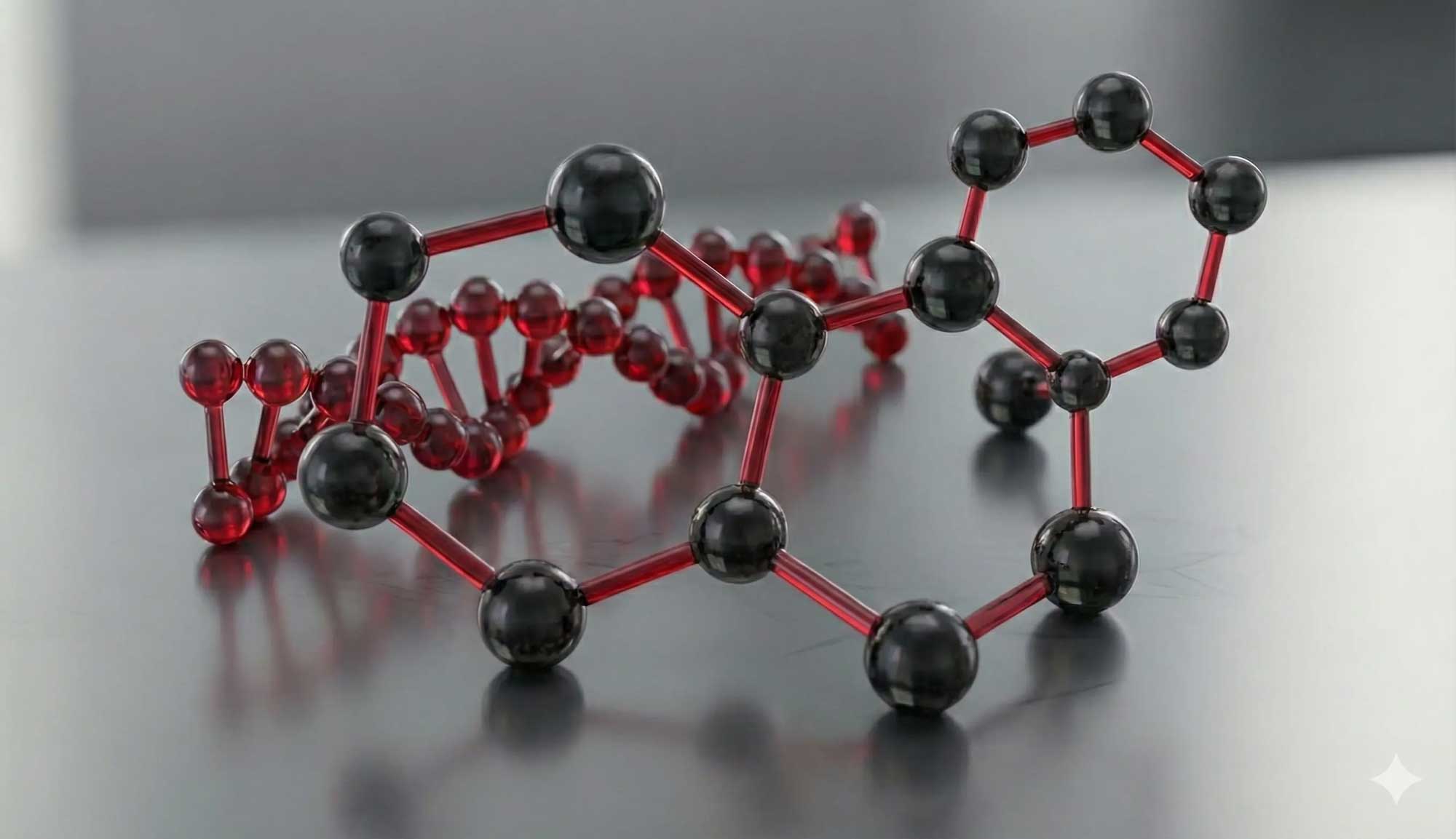
Polymers are chemical substances whose structure is based on long, chain-like or network-like macromolecules. The word literally means ‘made up of many identical parts’. This refers to the recurring building blocks, known as monomers. They link together to form large chains or networks and give the polymer its typical properties: depending on its structure, a polymer can be rubber-like and elastic, tough and flexible, or hard and dimensionally stable.
Polymers can occur naturally or be produced synthetically.
- Natural polymers include proteins, polysaccharides (such as starch or cellulose) and natural rubber.
- Synthetic polymers are created through chemical reactions (polymerisation, polycondensation, polyaddition) and form the basis of modern plastics technology – from standard plastics to high-performance plastics and technical elastomers.
The following factors, among others, are decisive for the behaviour of a polymer:
- the type of monomer and side groups,
- the chain length (molecular weight),
- the cross-linking (linear, branched, cross-linked),
- and the interactions between the chains.
Depending on the cross-linking, thermal behaviour and mechanical properties, a distinction is made between several material classes:
- Thermoplastics – can be melted and reshaped multiple times; usually hard to tough-elastic when processed
- Thermosets – highly cross-linked, dimensionally stable materials that cannot be remelted after curing
- Elastomers – rubber-like, elastically deformable materials with permanent cross-linking
- TPE (thermoplastic elastomers) – combine elastic behaviour with thermoplastic processability, e.g. for flexible components that can be welded or injection moulded
The term polymer is therefore the umbrella term for the entire world of plastics – from flexible sealing materials such as elastomers to high-strength, dimensionally stable technical components made of thermoplastics or thermosets.
Contact